Amman
About
Discover the history of Amman
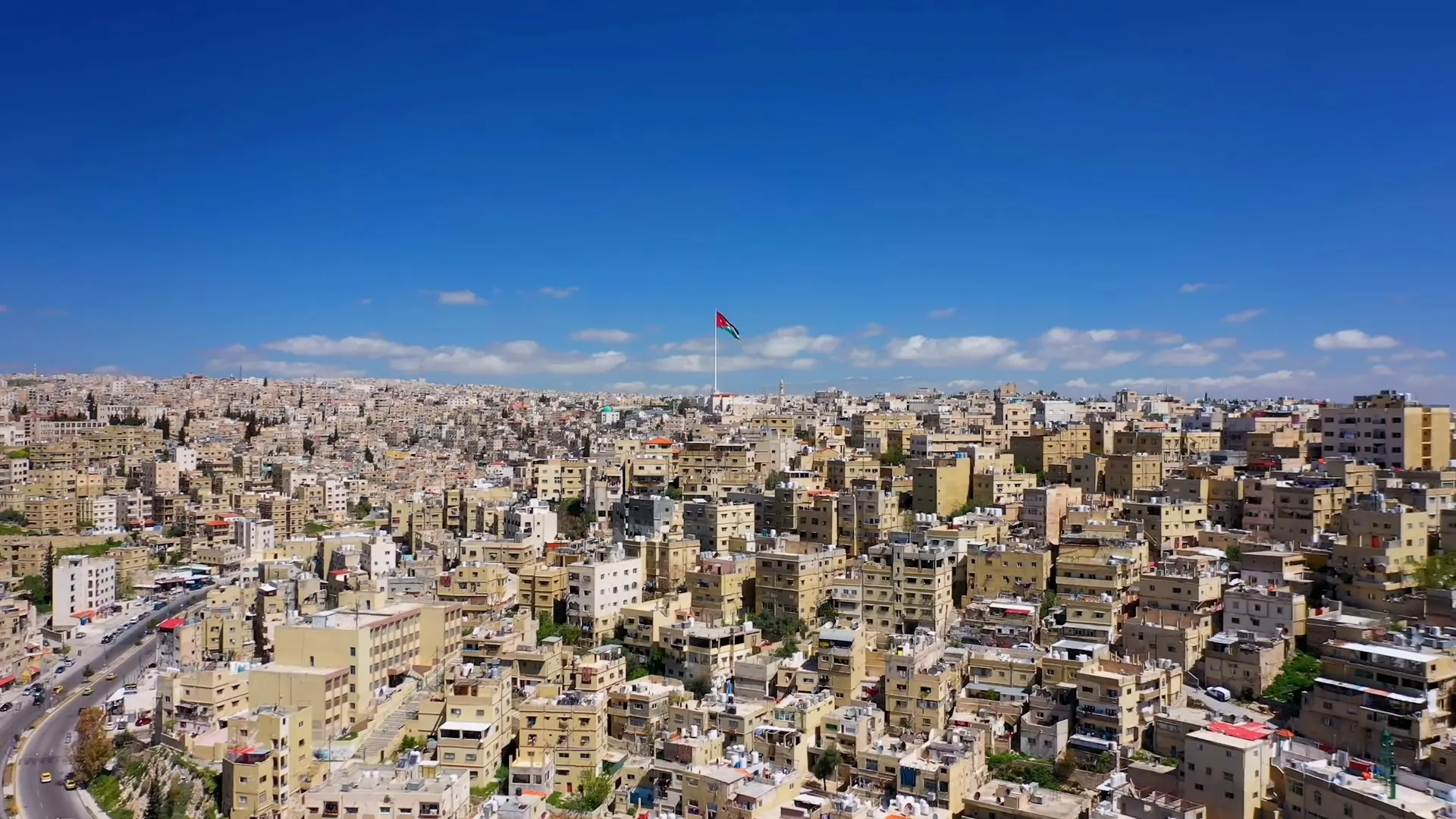
Amman is spread across some twenty hills of white stone, and its streets climb and drop all day long. At the top, the Amman Citadel keeps the columns of a Roman temple, a giant marble hand and a view over the rooftops. Just below it, the Roman Theatre is cut straight into the slope and seats six thousand. The city works as a base camp for the whole country: the colonnaded streets of the Archaeological Site of Jerash, the Crusader walls of Kerak Castle, the desert frescoes of Qasr Amra. From Mount Nebo the view reaches Jericho and the Jordan valley. Mansaf comes to the table, lamb simmered in dried yoghurt over rice, and knafeh arrives scalding, all melted cheese and syrup. Down in the old centre the air smells of cardamom coffee, and the shops sell gold, spices and carpets within the same few blocks.
Travel score
The travel score throughout the year.
January
Very badFebruary
Very badMarch
BadApril
GoodMay
Very goodJune
PerfectJuly
PerfectAugust
ExcellentSeptember
PerfectOctober
Very goodNovember
ModerateDecember
BadThings to do
Discover the best attractions in Amman and its surroundings
Al-Khazneh
A Nabataean façade nearly 40 metres high, cut into Petra's sandstone in the first century AD, its crowning urn pocked with bullet marks left by Bedouin who believed it held gold. Petra lies about three hours from Amman by road, and the Khazneh is reached on foot through the Siq gorge.
Archaeological Site of Jerash
One of the best-preserved Roman cities outside Italy: Hadrian's Arch, the oval forum and a colonnaded cardo running close to a kilometre. It lies 50 km north of Amman, served by buses from Tabarbour station.
Amman Citadel
The fortified hill above the city gathers the Roman Temple of Hercules, the Umayyad Palace and an archaeological museum. A taxi spares you the climb from downtown, and the view down to the Roman theatre is best in late afternoon.
Roman Theatre of Amman
Carved into the hillside in the 2nd century, this 6,000-seat theatre still hosts performances and houses two small museums of folklore and popular tradition. The upper tiers are steep but offer the best view over downtown.
Ajloun Castle
An Ayyubid fortress built in 1184 by one of Saladin's generals to watch the Jordan Valley routes. Its towers look out as far as the river, and it pairs easily with Jerash on the same road north.
Royal Automobile Museum
King Hussein's personal collection — more than 70 cars and motorcycles tracing the kingdom's history since 1916. It stands inside Al Hussein Park, west of the centre.
Other destinations you might like
Nearby picks in the same theme
Some of the text on this page is generated using AI and may contain inaccuracies. Please check important details.Photos and ratings provided by Google Maps