Gdańsk
About
Discover the history of Gdańsk
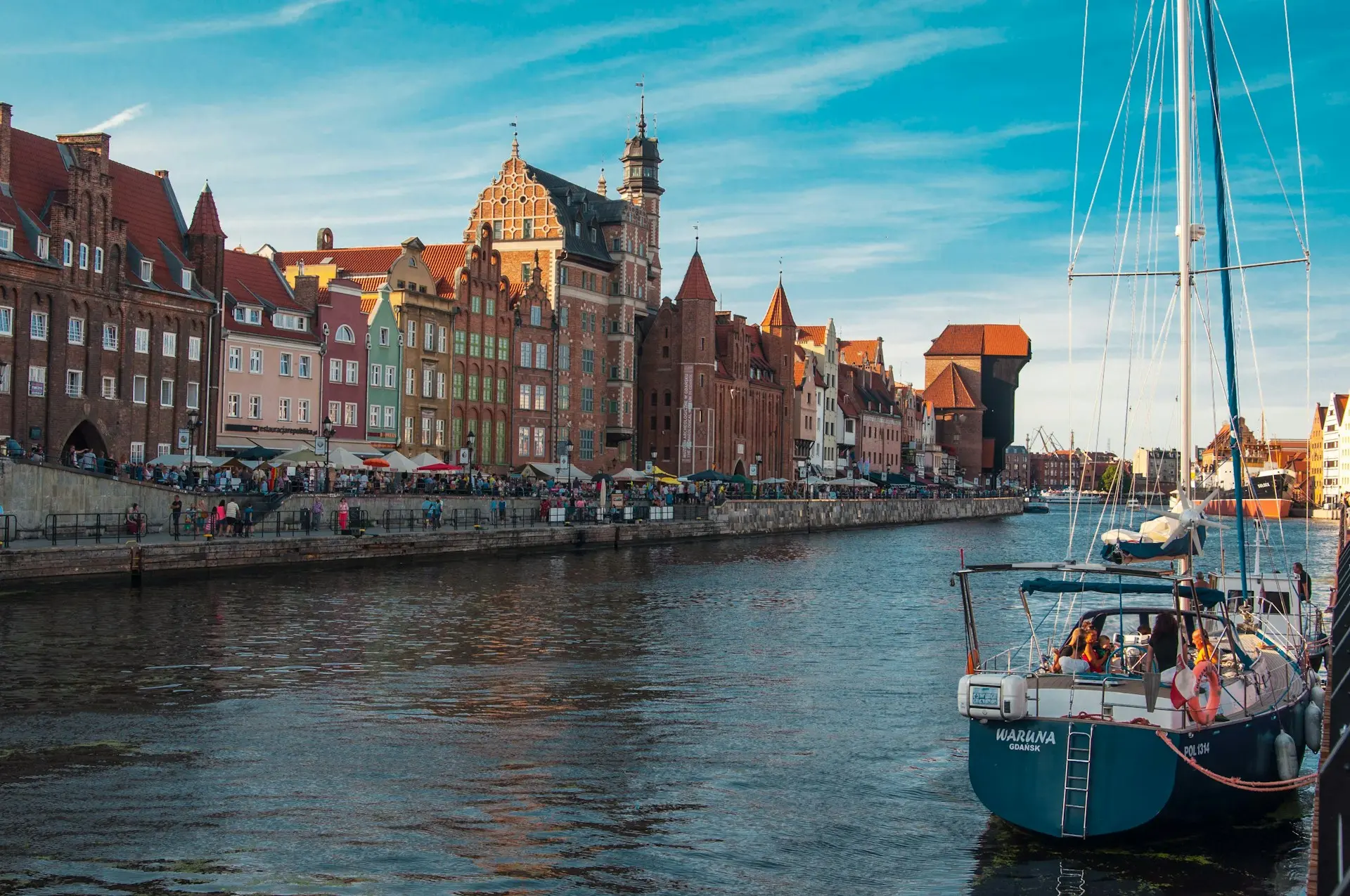
Gdańsk stands as one of the Baltic's great port cities, shaped by its Hanseatic past and its decisive role in the fall of communism in Eastern Europe. The Old Town, rebuilt after World War II, features colorful merchant façades surrounding the Main Town Hall and St. Mary's Church, one of Europe's largest brick churches. Along the Motława River, lively quays, cafés, and former warehouses testify to its former commercial vitality. The shipyards, symbols of the Solidarity movement, now house museums dedicated to this pivotal period. Nearby, the Oliwa district and its gardens complete a visit to a city where maritime history and political memory are woven into every street.
Travel score
The travel score throughout the year.
January
PoorFebruary
ModerateMarch
GoodApril
GoodMay
Very goodJune
Very goodJuly
ModerateAugust
GoodSeptember
ExcellentOctober
Very goodNovember
GoodDecember
ModerateThings to do
Discover the best attractions in Gdańsk and its surroundings
Malbork Castle
14th-century Teutonic castle housing museum of medieval artifacts, paintings & an amber collection.
Museum of the Second World War
Striking, modern museum devoted to the Polish experience during the second World War.
Neptune's Fountain
Landmark 17th-century bronze statue of the sea god surrounded by historic houses & cafes.
Oliwski Park
City park on 10 hectares with paths, French–style gardens & a greenhouse with exotic plants.
Westerplatte
Former military area and site of first World War II invasion now marked by a grand stone monument.
St. Mary’s Basilica
Completed in 1502, one of the largest brick churches in the world, with room for some 25,000 people and a 15th-century astronomical clock. More than 400 steps climb the tower for a view over the old town and the port.
Other destinations you might like
Nearby picks in the same theme
Some of the text on this page is generated using AI and may contain inaccuracies. Please check important details.Photos and ratings provided by Google Maps