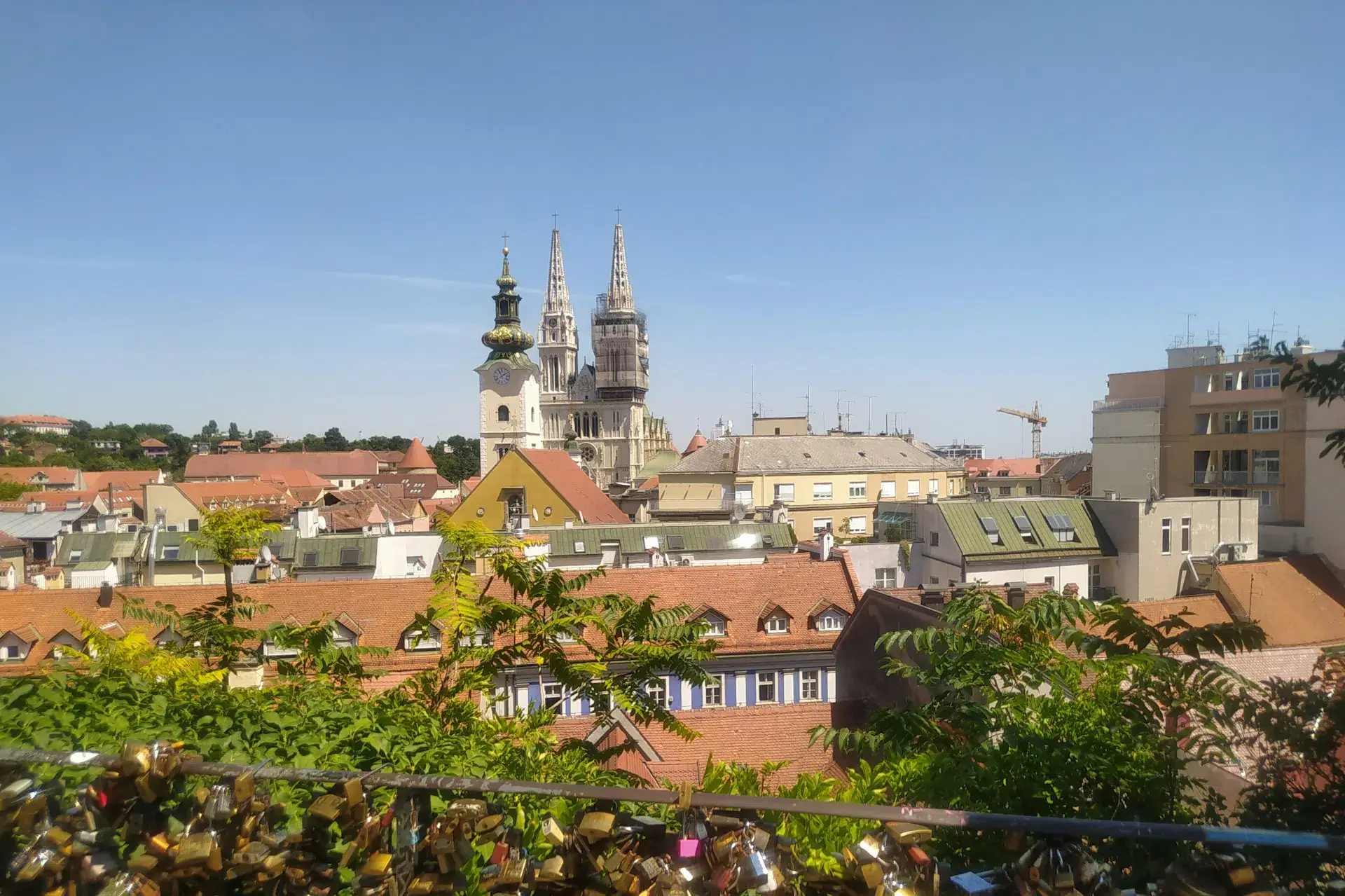
Zagreb
About
Discover the history of Zagreb
Zagreb lives outdoors: Tkalčićeva Street is one long run of terraces, and the city spends its evenings there until late. Every morning Dolac Market opens its red parasols over the fruit stalls, a minute from the cathedral. The upper town, just above, stays cobbled and quiet: the roof of St. Mark’s Church is laid out as two coats of arms in glazed tile, and a lamplighter still comes round at dusk to light the gas lamps by hand. The city has a taste for unlikely museums, none more so than the Museum of Broken Relationships, built entirely from objects strangers sent in after a break-up. Its Advent market, voted the best in Europe three years running, fills the centre with lights, choirs and mulled wine. And two hours away by road, Plitvice Lakes National Park spills sixteen turquoise lakes into one another down a chain of waterfalls.
Travel score
The travel score throughout the year.
January
Very badFebruary
Very badMarch
Very badApril
Very badMay
BadJune
ModerateJuly
Very goodAugust
GoodSeptember
PoorOctober
PoorNovember
Very badDecember
Very badThings to do
Discover the best attractions in Zagreb and its surroundings
Plitvice Lakes National Park
Sixteen lakes stepping down over travertine dams in a forested canyon, linked by waterfalls and crossed on wooden boardwalks just above the water. The park is about two hours' drive from Zagreb; entry is by timed ticket, best bought online, and swimming is banned.
Maksimir Park
Opened in 1794, one of the oldest public parks in Europe: an English-style landscape of woods, meadows and lakes that also holds the city zoo. Park entry is free — only the zoo charges — and the gates face the Dinamo stadium.
Tkalčićeva Street
The street follows the covered bed of the Medveščak stream, which divided Gradec from Kaptol until it was built over in the late nineteenth century — hence its curve of low painted houses. It climbs from Ban Jelačić square and holds most of Zagreb's bar terraces.
Trakošćan Castle
A castle of 13th-century origin remade as a romantic residence by the Drašković family in the 1850s, its rooms kept furnished, above an artificial lake ringed by a walking path. It stands near the Slovenian border, about an hour and a half from Zagreb.
Croatian National Theatre in Zagreb
A neo-Baroque theatre opened in 1895 by Emperor Franz Joseph, with Meštrović's bronze Well of Life set before the entrance. Opera, ballet and drama share the stage, and a performance ticket is the way to see the gilded hall.
King Tomislav Square
The lawned esplanade between the central station and the centre, framed by the equestrian statue of King Tomislav and the yellow Art Pavilion of 1898. In December it hosts the ice rink of Zagreb's Advent market.
Other destinations you might like
Nearby picks in the same theme
Some of the text on this page is generated using AI and may contain inaccuracies. Please check important details.Photos and ratings provided by Google Maps